
Healthy grasslands are the foundation of life in Lekurruki: for wildlife, for livestock and for the families who share this landscape. Over 15 days in early 2026, Lekurruki Community Conservancy, home of Tassia Community Lodge, led a community-driven effort to bring degraded rangeland back to life, with restoration funding from the Laikipia Conservancies Association (LCA).
How the restoration works
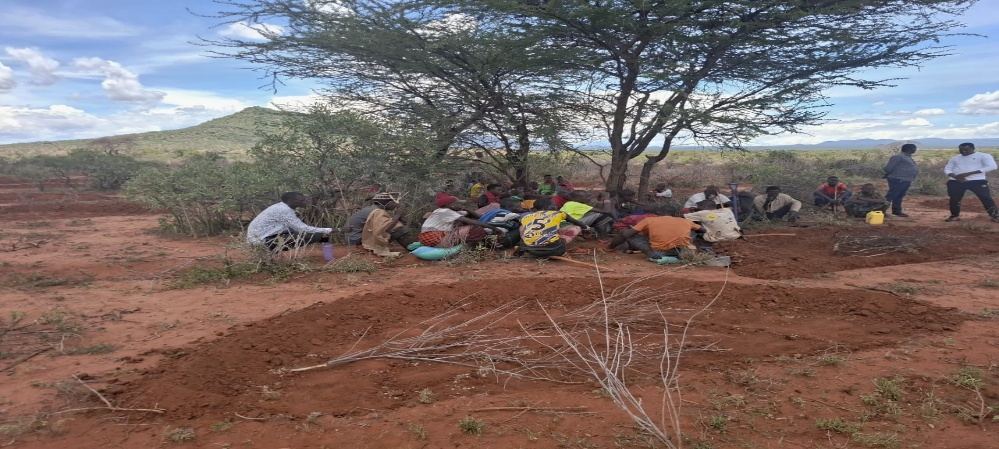
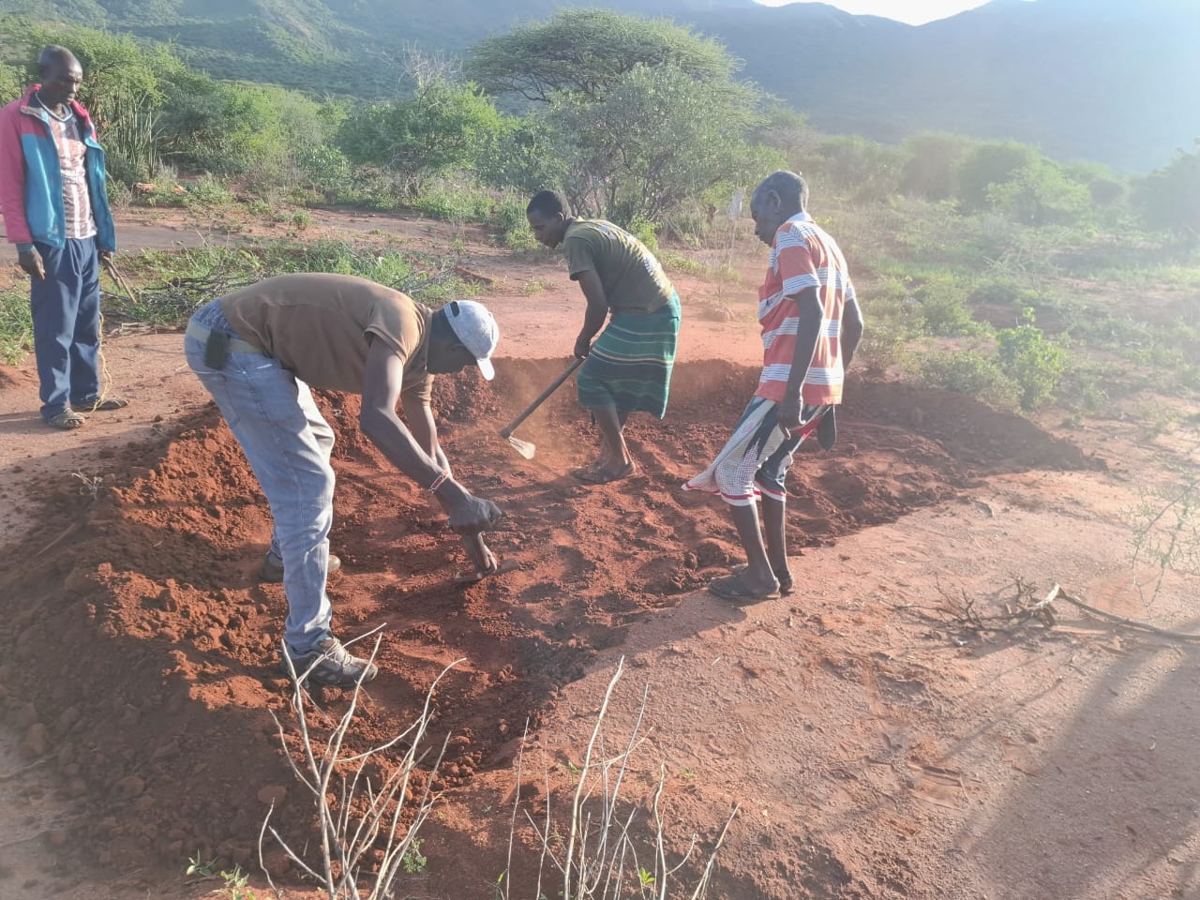
The work combined two simple but powerful techniques. Semicircular bunds (crescent-shaped earth banks dug into the slope) catch and hold rainwater, giving the soil time to soak it up and creating the right conditions for grass to grow again. Within the bunds, the team reseeded the land with 25 bags of indigenous grass seed, Cenchrus ciliaris and Eragrostis superba, both native to the Lekurruki landscape.
The activity was carried out at two sites:
- Naimaral Village: Narasha Grazing Block (75 acres)
- Marti Village: Nyongoni Grazing Block (136 acres)
Why it matters
- Restoring degraded rangeland
- Supporting livestock fattening programmes through better pasture
- Establishing a grass seed bank for future reseeding
- Creating a learning and demonstration site for restoration practices
What the community achieved
This was community work in every sense. Men, women and youth from the surrounding villages were employed on daily wages across two phases: 44 people for 8 days in the first phase and 42 people for 7 days in the second, guided by five supervisors.
Together they built 3,201 semicircular bunds, surpassing the target of 3,000, and reseeded about 155 acres of rangeland. Community members also volunteered their own time to carry out repairs at the Marti rehabilitation site.
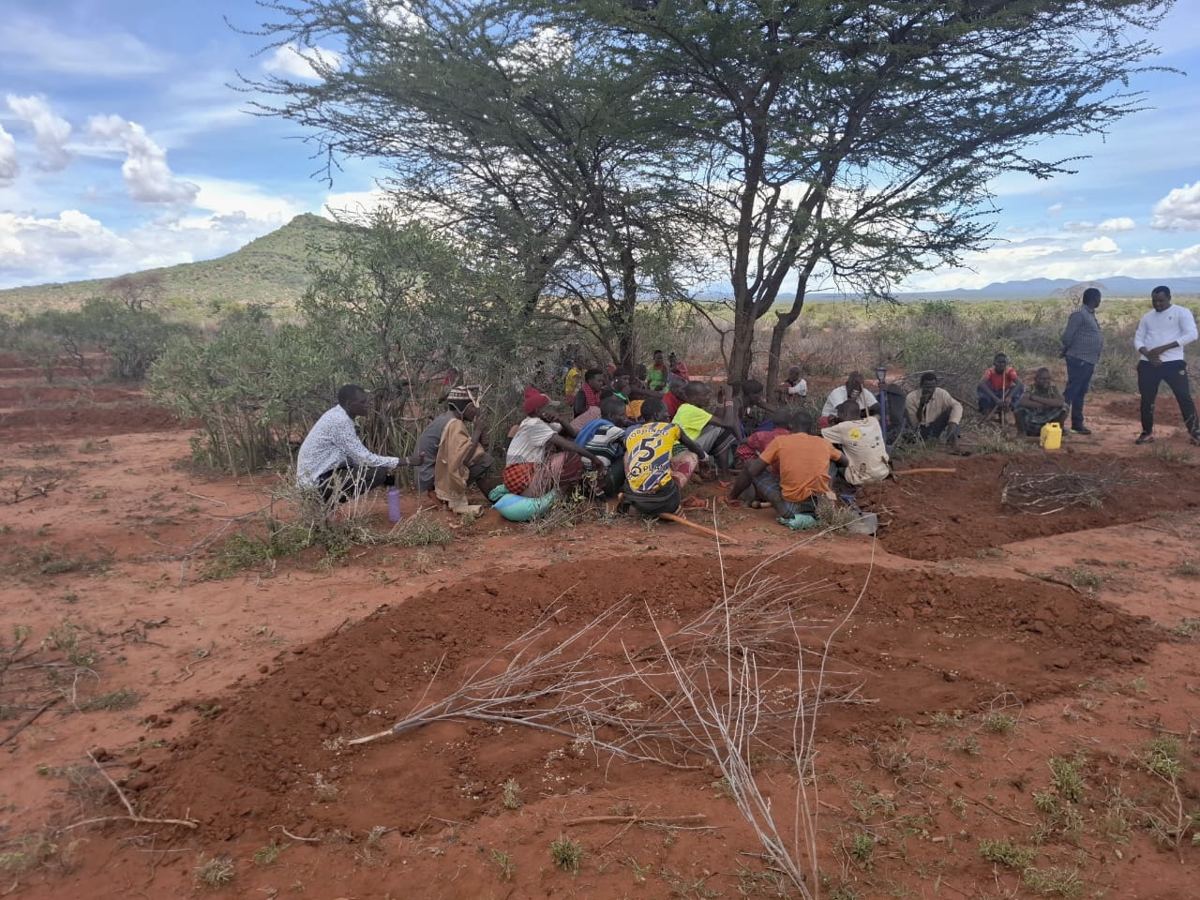
Alongside the fieldwork, the conservancy held sensitisation sessions to help members understand why the rehabilitated sites must be protected while the grass regenerates. The message was one of collective responsibility: these areas will only deliver lasting ecological and livelihood benefits if everyone helps look after them.
Looking ahead
To protect these gains, the conservancy plans to:
- Hold follow-up community meetings on post-restoration management
- Enforce grazing by-laws so the land has enough time to regenerate
- Designate the rehabilitated areas as a learning and demonstration site and a grass seed bank for the Lekurruki community
- Strengthen monitoring and evaluation to track regeneration and impact
- Install an electric fence to better protect the rehabilitated sites
Every bund dug and every seed sown is an investment in a greener, more resilient Lekurruki. When you stay at Tassia Community Lodge, you are part of that story. Your visit helps support the conservancy and the community working to protect this land.
With thanks to the Laikipia Conservancies Association for funding this work, and to every community member who took part.